
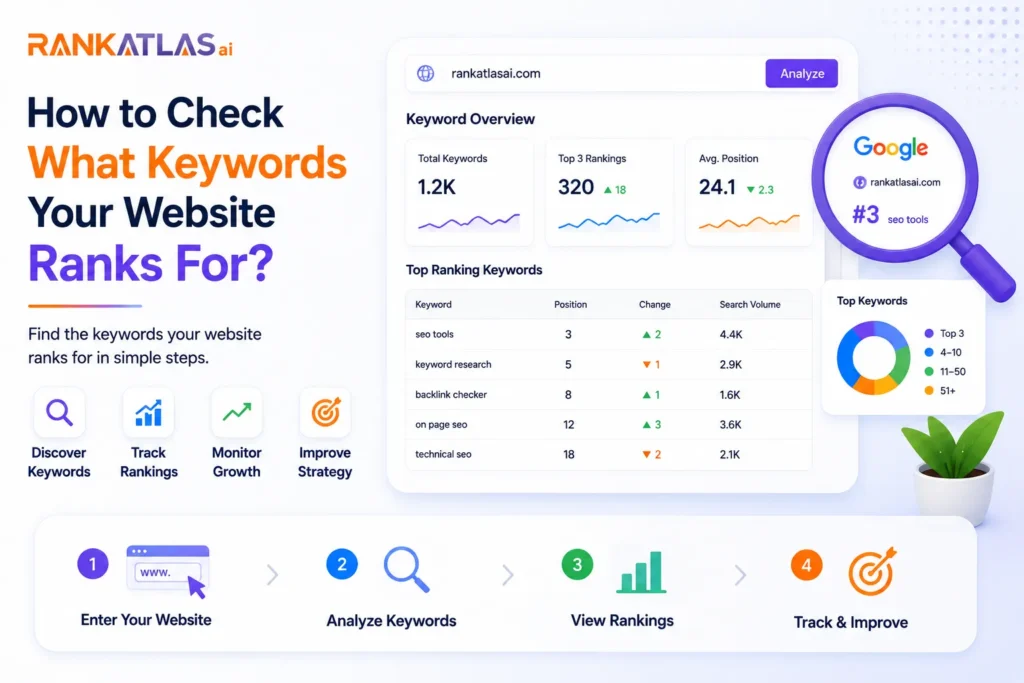
Knowing which keywords your website ranks for is one of the most useful things you can do for your SEO. It tells you what is already working, where you are losing clicks, and where the real growth opportunities are hiding.
Google Search Console (Free and Most Accurate)
This is the first place you should check. Google Search Console shows you exactly which queries are bringing impressions and clicks to your site, straight from Google itself. Go to the Performance report, and you will see a full list of keywords your site is appearing for, along with average position, click through rate, and total impressions. It is free and the data comes directly from the source, which makes it the most reliable option available.
Ahrefs
In Ahrefs, go to Site Explorer, enter your domain, and open the Organic Keywords report. You will see every keyword your site ranks for, the position it ranks at, estimated traffic, and keyword difficulty. You can also filter by position to see which keywords are sitting on page one versus page two, which helps you prioritize what to optimize next.
Semrush
Semrush works similarly. Enter your domain in the search bar and go to Organic Research. The Keywords tab shows your full ranking keyword list with position, volume, and traffic data. Semrush is particularly useful for tracking keyword movement over time and spotting keywords that have recently dropped or improved.
Moz Pro
Moz Pro has a Rank Tracker feature where you can add your domain and track specific keywords manually. It is better for monitoring a defined set of target keywords rather than discovering new ones you did not know you ranked for.
What to Do With This Data
Once you know what keywords you rank for, look for three things. First, find keywords sitting in positions 5 to 15 since these are the easiest to push onto page one with some optimization. Second, find keywords getting impressions but very few clicks, which usually means your title or meta description needs work. Third, look for keyword gaps, topics your competitors rank for that you do not, and build content around those.
Checking your keyword rankings regularly is a core part of any serious SEO workflow and the starting point for making smarter content and optimization decisions.